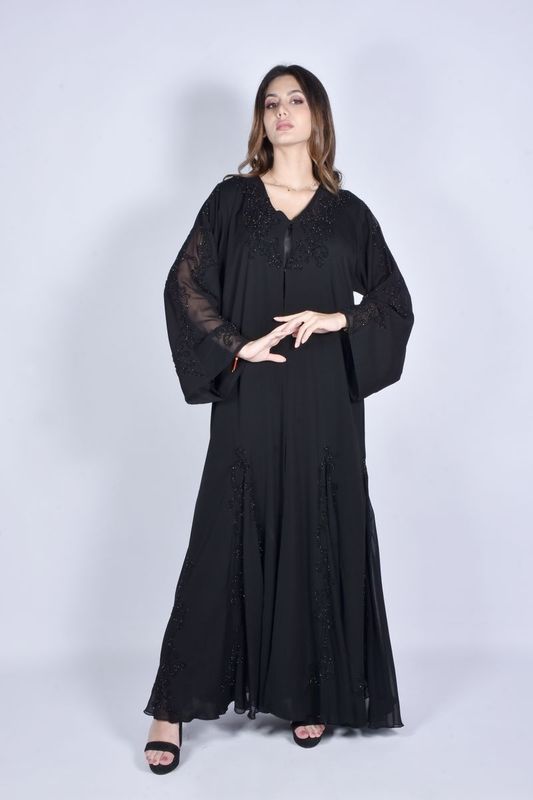
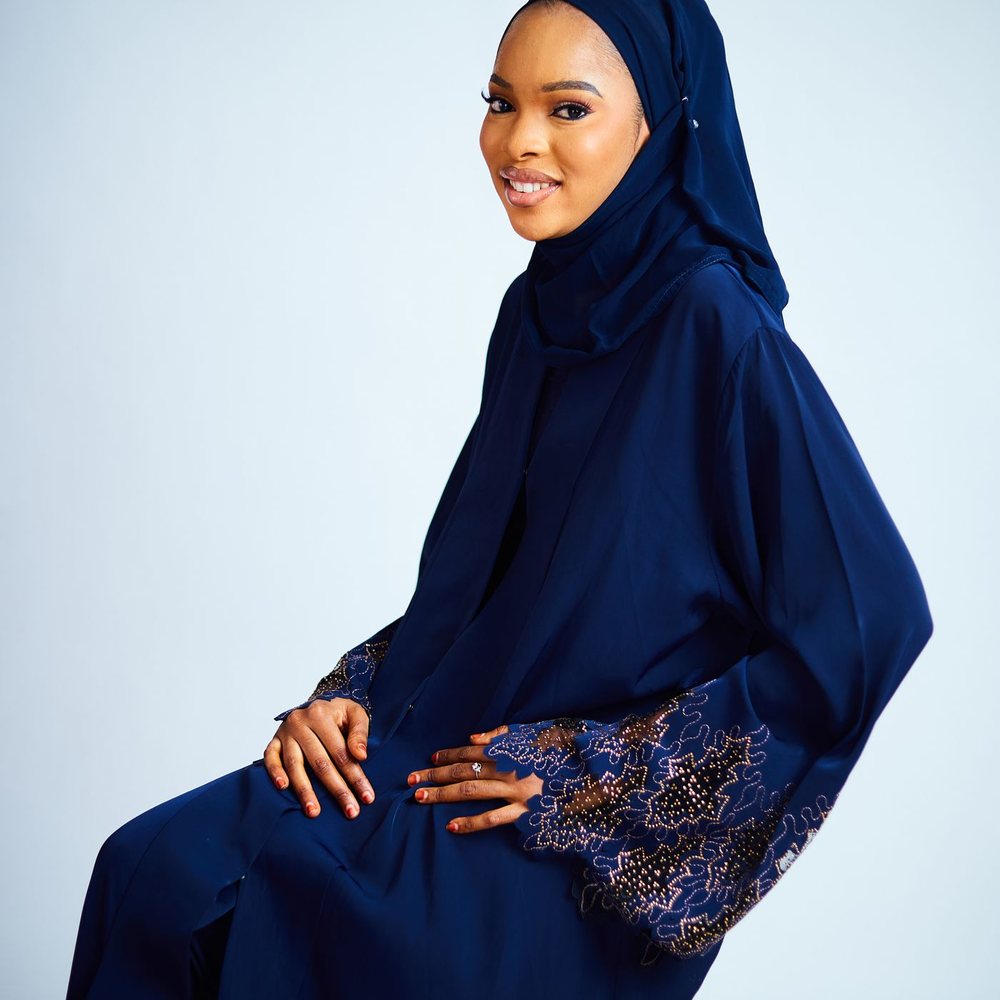
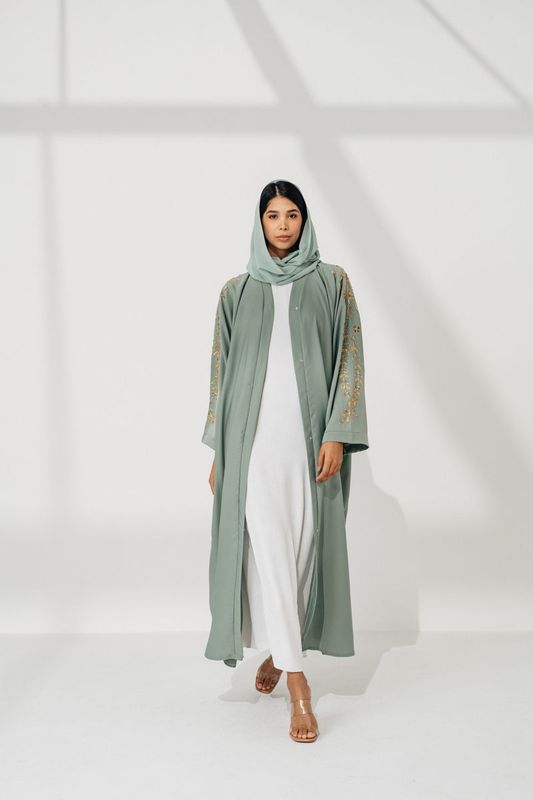
The best abaya fabric for summer in the UAE is one that lets air move, stays opaque and dries quickly. For most days that means a light nida or a linen blend, with lightweight crepe close behind. Keep chiffon for sleeves, overlays and shaylas, and save organza and satin for evenings indoors.
Key takeaways
- Breathability, opacity and drape matter more than weight alone. A heavy fabric that hangs away from the body can feel cooler than a thin one that clings.
- Nida and lightweight crepe are the most reliable everyday summer fabrics.
- Linen blends are the coolest feeling, but they crease.
- Jersey is comfortable and easy to travel with, but can feel warm in direct sun.
- Chiffon, organza and satin are occasion fabrics, best layered or lined.
- In UAE winters, you need layering for air conditioning more than a thicker fabric.
What makes an abaya fabric good for UAE heat?
A good summer abaya fabric does four jobs at once: it lets air pass through, it stays opaque in bright sun, it does not cling when you are warm, and it recovers quickly after you have been sitting in the car. UAE summer temperatures often exceed 40 °C, and in coastal cities like Dubai the humidity adds to the discomfort, so all four matter.
There is a common belief that the thinnest fabric is always the coolest. In practice, drape matters just as much. A fabric that falls away from the body creates a column of moving air underneath, which is why a fluid nida can feel cooler than a thin jersey that sits against the skin.
Colour plays a part too. Black absorbs more heat in direct sun, but most of the day in the UAE is spent moving between air-conditioned spaces. Many women find that fabric choice affects their comfort far more than colour. If you spend long periods outdoors, sand, stone, olive and soft grey are practical alternatives. You will find these tones in our abaya collection, particularly from Dune & Pearl.
How do the main abaya fabrics compare?
Here is how the seven fabrics we work with most behave in UAE conditions. Ratings are relative to each other, based on how the fabrics behave in fittings and everyday wear.
| Fabric | Breathability | Opacity | Creasing | Best for | Care |
|---|---|---|---|---|---|
| Nida | High | Opaque | Very low | Everyday, office, travel | Gentle machine or hand wash, cool |
| Crepe (lightweight) | Medium–high | Opaque | Low | Everyday, office, school run | Gentle wash, cool; light steam |
| Linen blend | Very high | Mostly opaque | High | Daytime, weekends, beach | Gentle wash; steam while slightly damp |
| Jersey | Medium | Opaque | Low | Travel, long drives, errands | Gentle wash; dry flat |
| Chiffon | High | Sheer | Low–medium | Sleeves, overlays, shaylas | Hand wash, cool |
| Organza | Medium | Sheer | Medium | Occasion sleeves and layers | Hand wash or specialist clean |
| Satin | Low–medium | Opaque | Shows marks | Evening, Eid, weddings | Hand wash cool or specialist clean |
Always follow the care label on the specific piece. A blend or an embellished panel can change what is safe.
Is nida the best fabric for a summer abaya?
For most women, yes. Nida is a light, smooth fabric with a soft matte finish that drapes away from the body and hides creases well. It stays opaque, washes easily and dries quickly, which makes it the practical choice for everyday wear from May to September. It is also the classic base for many of the occasion abayas from Noor Atelier, where it is finished with pearl trim or lace panels.
The one thing nida does not do is look crisp. If you prefer structure, such as sharp shoulders or a defined collar, crepe will give you that more readily.
When should I choose crepe instead?
Choose crepe when you want a smarter finish that still copes with heat. Crepe has a fine, grainy texture that resists creases and holds its shape, which suits office wear, meetings and school pick-ups where you want to look put-together from morning to evening.
The weight makes a real difference. A lightweight crepe is comfortable through summer. A heavier crepe, with more body, is better kept for the cooler months from November to March. Our everyday Saffron Lane crepe abayas are designed for heat and long days; check the fabric notes on each product for weight and lining.
Are linen-blend abayas worth the creases?
If comfort in heat is your priority, yes. Linen allows more airflow than almost any other fabric and feels cool against the skin. Blending it with another fibre reduces, but does not remove, its tendency to crease.
Linen blends suit daytime, weekends and relaxed outings rather than formal occasions. Treat the soft creases as part of the look, or steam the abaya while it is still slightly damp after washing for a smoother finish. Pale linen can be slightly see-through in strong sun, so a long slip or wide-leg trousers underneath is a sensible habit.
Is jersey too hot for summer?
Jersey is comfortable but sits closer to the skin than woven fabrics, so it can feel warm in direct midday sun. Where it shines is travel and long drives: it does not crease, it moves with you and it packs small. A jersey abaya or kaftan is useful for a road trip to the east coast or a flight.
Modal jersey is also excellent for hijabs and shaylas, because it holds its place without pins. Browse our shaylas and scarves by fabric to compare.
How should chiffon, organza and satin be worn in summer?
Wear them as layers and details, and mostly in the evening. Chiffon is light and airy but slightly sheer, so it works best as sleeves, an overlay or a shayla, worn over an opaque base. Organza has a crisp, structured sheerness that suits statement sleeves on occasion pieces, such as Maison Rimal evening abayas. Satin is opaque and catches the light beautifully, but it breathes less and shows marks, so it belongs to evening events and Eid gatherings indoors.
For summer weddings and dinners, one useful approach is an opaque base in crepe or nida with chiffon or organza sleeves. You get the occasion finish without the full weight of a satin piece.
What should I wear in UAE winter and in strong air conditioning?
UAE winters are mild, with cool evenings rather than real cold, so layering matters more than a heavy fabric. Indoors, strong air conditioning in malls, offices and majlis rooms can be colder than the evening outside.
A few combinations that work well:
- A mid-weight crepe abaya over a fine knit or long-sleeved top.
- An open-front abaya over a co-ord set, so you can adjust as you move inside and out.
- A satin occasion abaya with a light wrap or a second shayla for outdoor desert or beach evenings.
- A kaftan or jalabiya from our kaftans and jalabiyas for relaxed winter evenings at home.
How do I care for each fabric in the heat?
Wash cool, dry in the shade and steam rather than press where you can. UAE sun is strong enough to fade dark colours quickly, so dry abayas inside or in shade, never in direct sun on a balcony.
- Check the care label first; it overrides any general advice.
- Wash nida, crepe and jersey on a gentle, cool cycle in a mesh bag, or by hand.
- Hand wash chiffon, organza and satin in cool water with a mild detergent.
- Do not wring. Press water out gently or roll in a towel.
- Hang abayas on a wide hanger to dry; dry jersey flat so it keeps its shape.
- Steam crepe, nida and linen blends. Iron satin on the reverse at a low setting, with a pressing cloth.
- Apply perfume to the skin and let it dry before dressing, so oils do not mark the fabric.
How do I choose the right length once I have chosen a fabric?
Fabric affects how a length looks. Fluid fabrics like nida and jersey pool slightly at the floor, while crisp crepe stands a little away from it. Use our abaya length chart to choose by height, and if you want a second opinion on fabric and length together, our stylists in Jumeirah and Al Barsha can show you the same style in different fabrics side by side.